In Conversation With Ali Mobasser
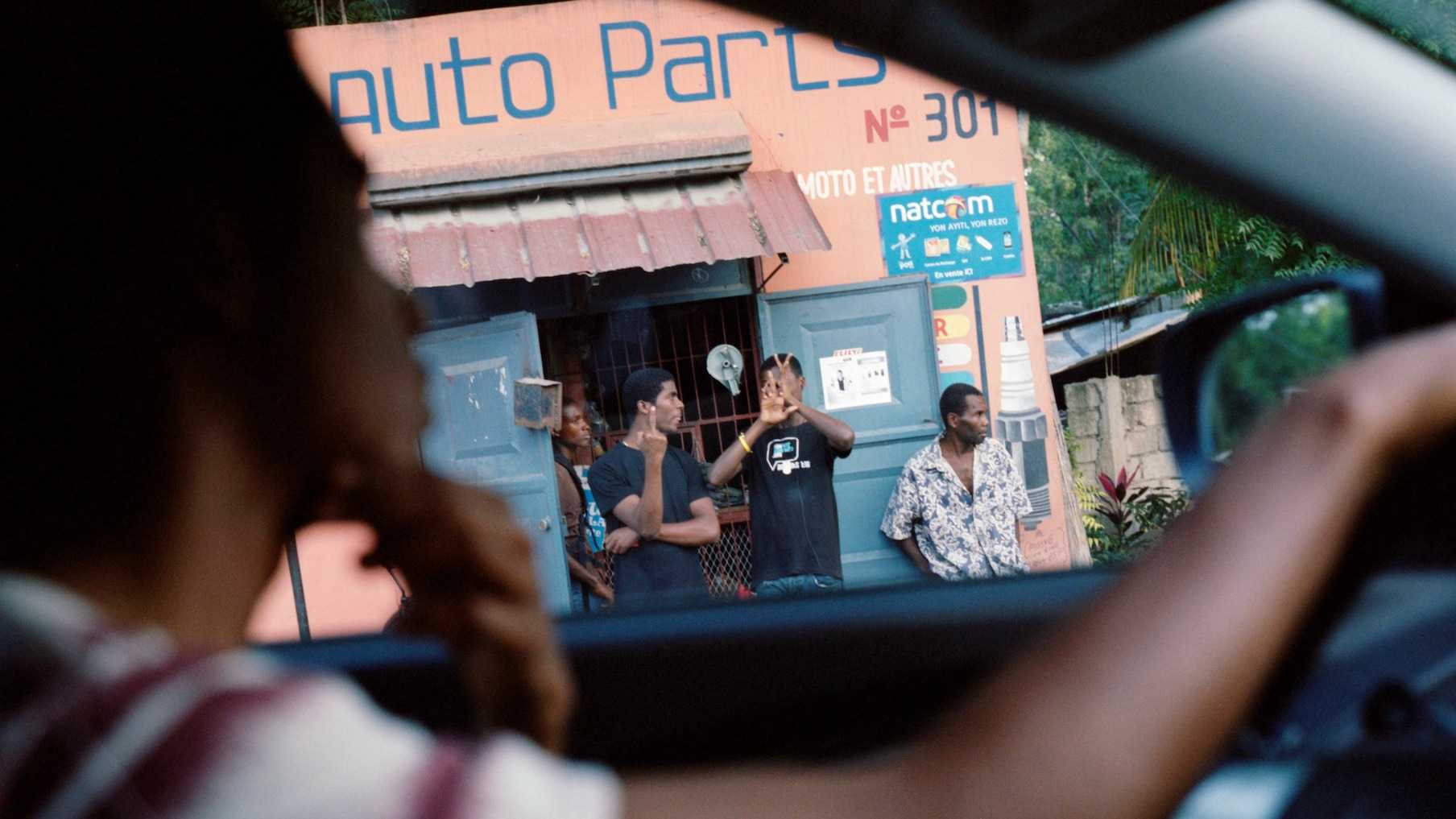
Ali Mobasser is an award-winning artist, photographer and art therapist. By the age of eight Ali had lived in the US, Iran, Saudi Arabia, Costa Rica and the UK. Fleeing the Iranian Revolution of 1979, he was sent to London to live with his aunt Afsaneh and his father. When Afsaneh suddenly passed away in 2013, she left a painful void in his life and an undeniable change in his practice. Her untimely death renewed an impulse to photograph those around him.
Ali’s latest series, ‘This is Not a Place’, curated by Simin Dehghani, has recently been on view at Art Practice Gallery. Made using a Rolleiflex camera, like the one once owned by his grandfather, the series began in 2014 and continued through to 2017. These moments take place across the UK, Haiti, France, Germany, California and Iran, yet the images resist a set geography. “Place” becomes less a location than a psychological condition shaped by recollection and displacement.
We caught up with Ali to learn more about his creative process, influences and the concept of “Place” in his work.
Take us back to when you first discovered your grandfather’s camera. Do you remember the first photo of significance you took? If so, what was the subject?
Yes, I actually remember going to my granddad's house, him getting that camera out of its leather case and me just holding it and being mesmerized by the viewfinder. There was something about seeing everything in reverse that was totally captivating. That was my first idea of composition. Because everything was flipped, it almost looked like a drawing. It was like everything was art directed, like it had been set up for you. That was the magic of that camera.
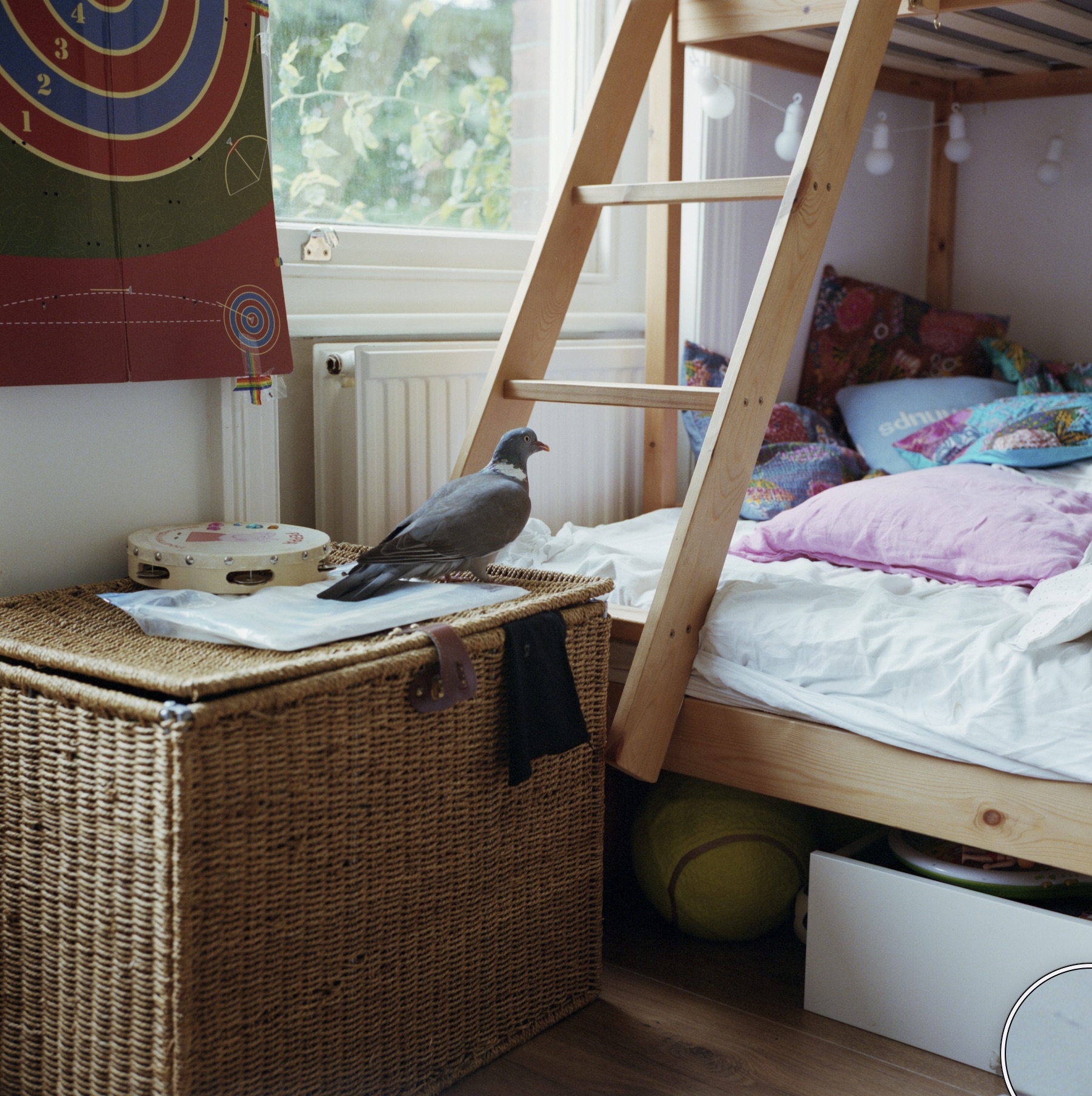
I also started exploring with my dad's 35mm camera. It wouldn't have any film in the camera but I would go with this massive zoom lens and point it at the trees outside the house and I'd bird watch through it. Not actually taking any pictures. It’s weird because now there's a pigeon in one of my pictures. I never realized actually but, thinking about it, birds have always been there.
I’m trying to think when my first actual photograph was though! I also had a little point and shoot camera. I was sent to London when I was eight years old by my mum to go on holiday to Putney to visit my dad and then I never went back. But, during that first summer, my dad took me on a boat ride from Putney to Westminster. I vividly remember that. I remember he took me to Madame Tussauds and he took a picture of me with Mr. T because Mr. T was pretty cool and there's a picture of him with Margaret Thatcher, which I took. A lot of the Iranians who left during the revolution often leaned politically to the right so he wanted a picture with his hero Margaret Thatcher and there was me, with Mr. T. So, yes, I guess this was actually the first photo I specifically remember taking of real significance. I haven’t really thought about that until now!
Who would you say are your biggest creative influences?
I'd always been intrigued by photojournalists, people like Henri Cartier-Bresson, but what really blew me away was when I was at art college and I discovered conceptual photographers. That was when I suddenly realized what can be done with photography as a real art form to show your ideas and concepts.
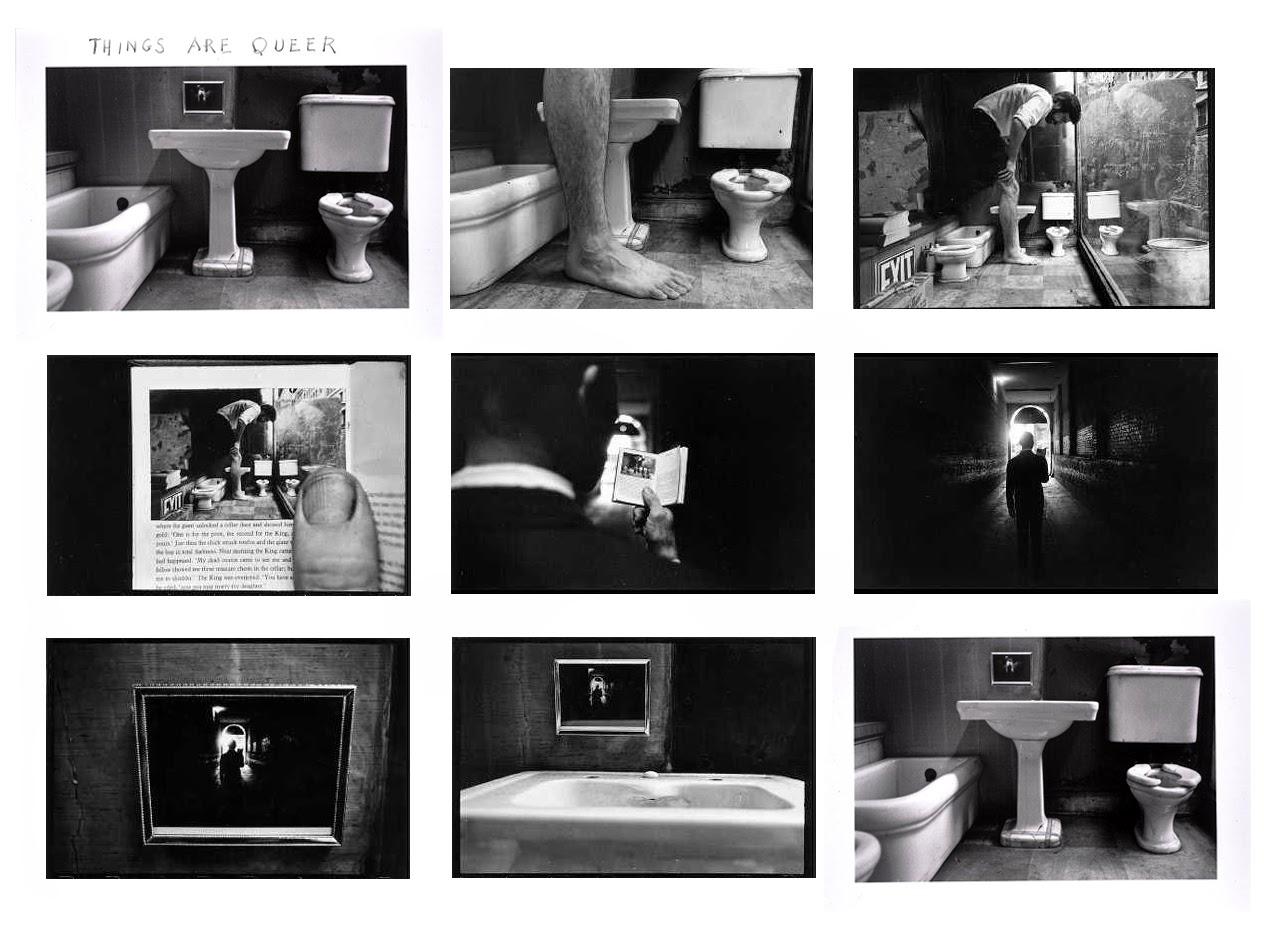
There are two people that really stick out to me. One was Duane Stephen Michals, he shot black and white sequences [see reference below]. He did a lot of fashion editorial as well, but he was an art photographer. There was one sequence of a guy just walking down an alleyway. It's a circular kind of sequence where you come back out, returning to the first picture again. So I was like, “woah”, you can tell a short story with ten pictures and you can tell a really cool story. So that really blew my mind.
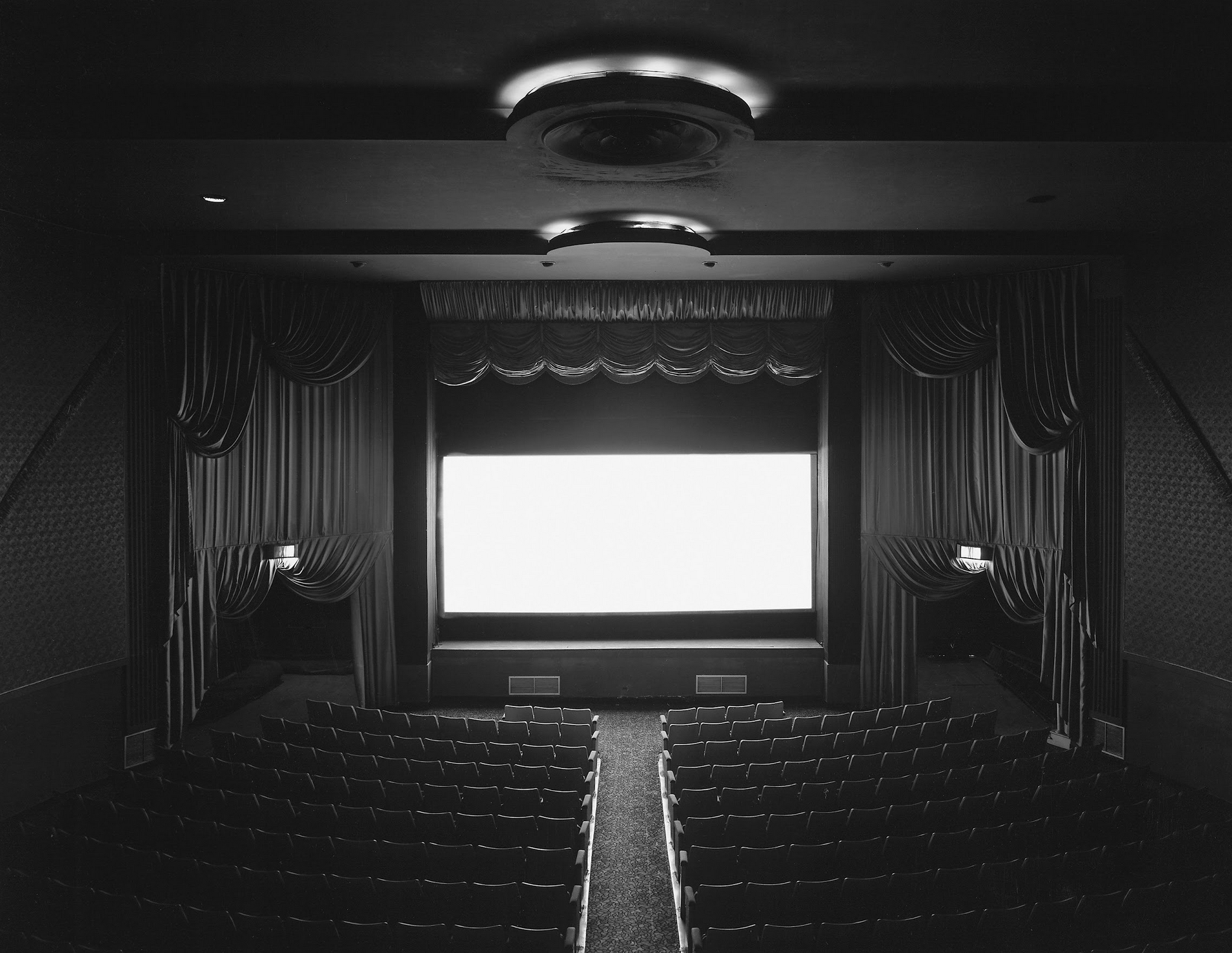
Then there’s Hiroshi Sugimoto, who shot black and white pictures of old Art Deco theatres across America. He set up a large format camera in front of the theatre screen so you'd see the whole theatre and he'd do an exposure of the whole film and then the light from the screen would illuminate the whole theatre [see reference below].
He also did a whole series in Madame Tussauds as well. That is weird given I just remembered the first photo. This is all connecting up! He did a whole series of waxworks in Madame Tussauds where he lit Henry VIII and Queen Victoria but only using candle light and they're really beautiful portraits. He also did a series of seascapes at night using a long exposure capturing the moonlight over the sea. There are these amazing seascapes with just the horizon line in the middle, which felt very zen and spiritual.
What does the concept of “Place” mean to you and how does this influence your work?
The concept of place is a tricky one. I was always moving so much as a child. I was born in America because my father was going to university there but my parents are from Iran. So we moved back to Iran seven months after I was born. Three years later there's a revolution. We escaped to Saudi Arabia and lived there in the embassy for a while because my grandfather was an ambassador. We then had to move to Costa Rica and from there I went to London. The thing with the revolution was that everyone was just waiting to go back. They thought things were going to return to normal, but it never did. So everyone was living in this sort of temporary field.
My parents separated when I was six and then me and my mum went back to America where her family had settled on the east coast and then I went to a couple of schools there. My father then came to London to be with his father and sister. There was a massive exodus of Iranians going to California in the mid 80s. So me and my mum then moved to the west coast. I was there for one summer and then I got sent over to London.
When I came to London I went to three different primary schools in a matter of a year and a half. When I was twelve I was meant to go back to live with my mum again and I had a big goodbye party at school and then, that summer, I realised I wasn't going. So then I was really angry.
I shared a room with my dad between the ages of eight and eighteen. So I had no privacy. There’s “place” in a country, then there's “place” in the house, the room. I didn’t feel like I had my own “place”. I couldn't wait to leave and so when I was eighteen I went to Kingston Uni, which is only around the corner but it was huge for me. And that's where the project came from. It was about trying to process all of that and realize that maybe there is no “home”.
Since then, I've moved to New York and I've been all over London and my wife's the same. I think I finally found “my place” now though, this little part of London that we just love and I'm trying to give my children a better idea of an established, secure base. Much more than I had, at least.
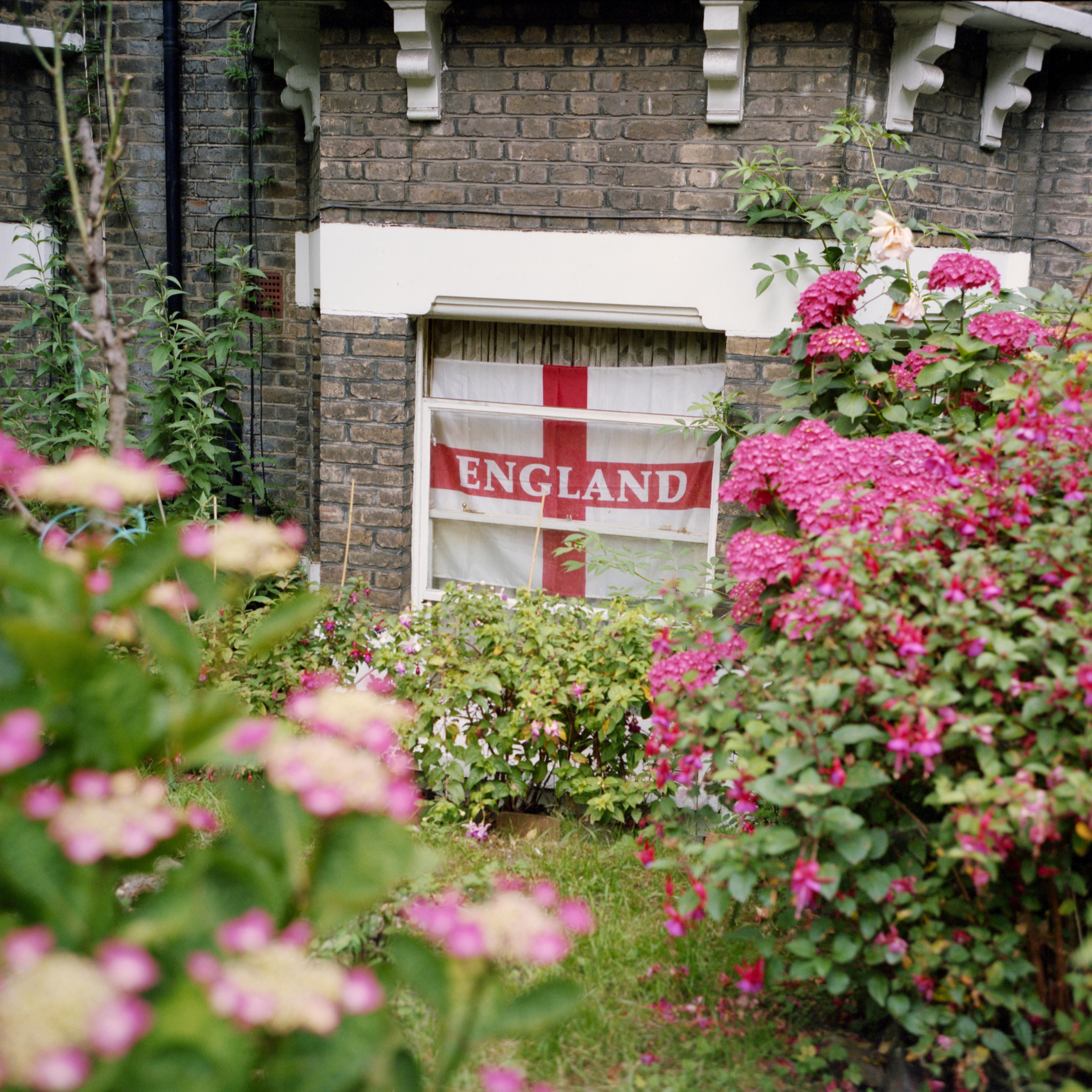
Your images have a tenderness to them, a sense of solitude. Can you tell us a little bit more about where that comes from?
I think it's maybe because I isolate people within the scene. So, there's not much else going on apart from either a figure or two figures. And there's an emptiness to the scene allowing you to really focus on the essence of the people in the shot.
I think that’s a reflection of my own sadness and melancholy because my aunt had died, isolated. She was lonely and I think that influenced the images I was seeing. I was seeing her in the people around me. Throughout this whole period, when I was taking those photos, I was definitely spiraling mentally as well. Things were not great and I was also feeling alone. It went from a reflection of her to a reflection of myself.
The expression is often also one of intrigue though. People are often curious about the camera because it’s from the 50s. And often it would lead to a conversation afterwards with the person because a lot of times people say to me, "that reminds me of my grandfather”, or, “I used to have a camera like that." So it was often a way into conversation.
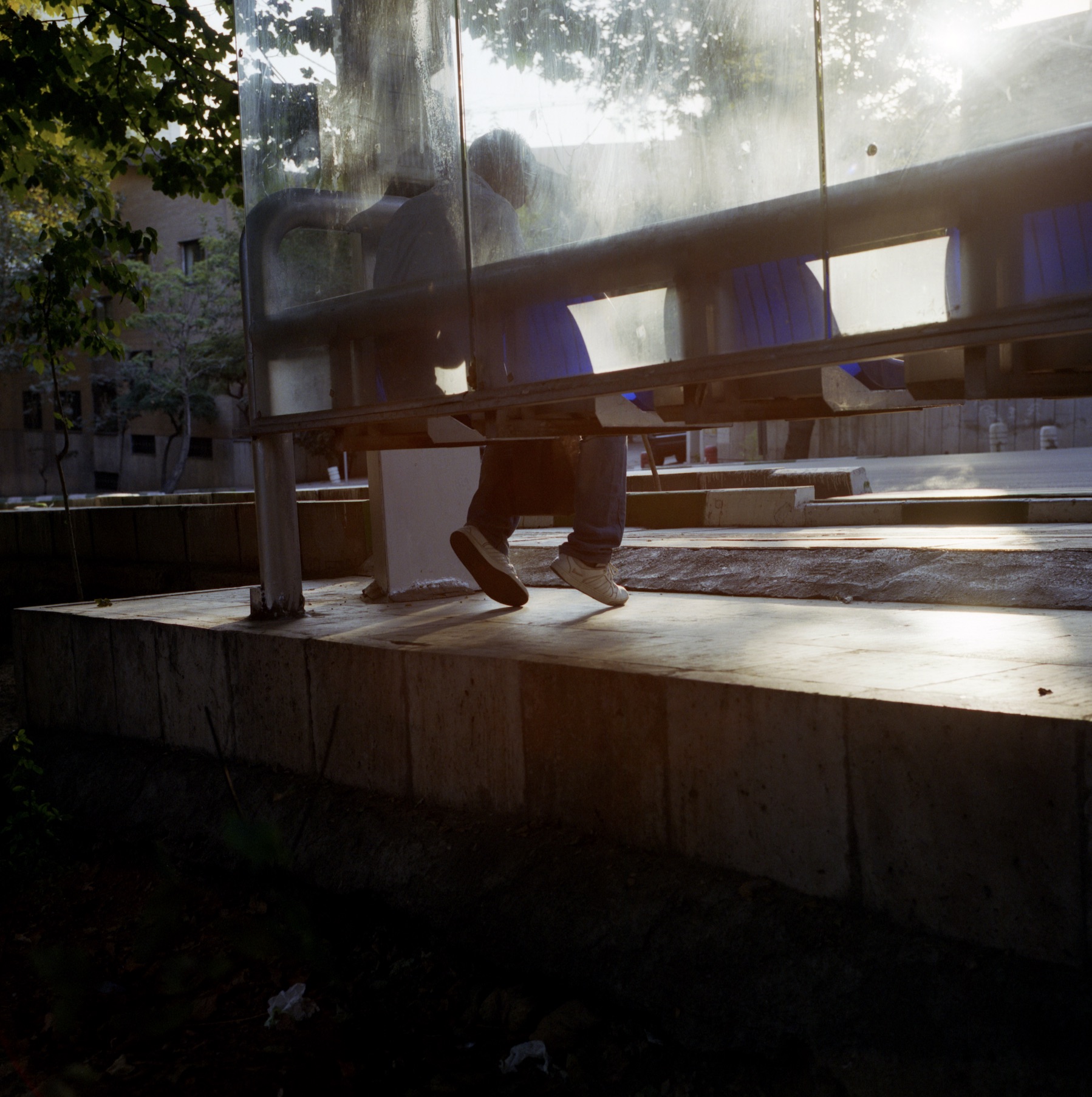
Do you still have your grandfather's camera?
No! We got burgled. We'd just come home and the burglar was in the house and we walked in. He literally grabbed the only thing there which was a bag with my grandfather's camera in it.
The camera had made it out of Iran after he'd escaped and few things made out at that time. It was probably sold for a tenner down the road. I used to shoot a lot around the area where I live so I may have even photographed the person who nicked it. So it went to the streets. There’s something quite poetic about that really.
It must have been hard to come to terms with that?
It was actually, yes. I do think being able to let go of the object and what it held was also good for me though. Knowing that I can just go and buy a camera again and do my own thing, like I'm not tied into anything.
I always felt that a lot of the things my family owned had a curse on them. So, it was probably a good thing that it went, in a way. A lot of their property was taken or stolen and so much of it was surrounded by grief.
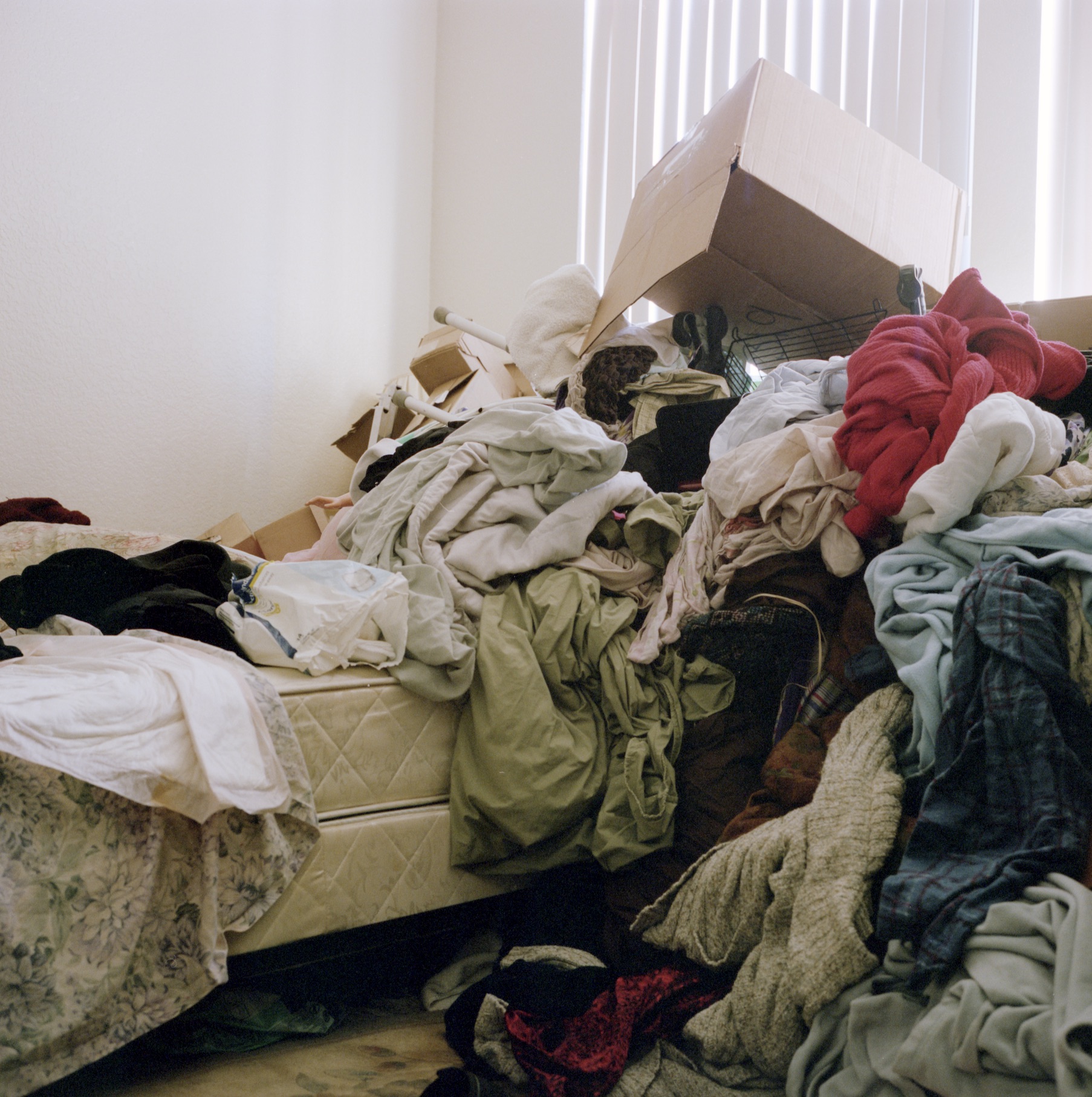
When Iranians left Iran, they often left bags packed up full, as if they were always waiting to go back. There are many images of bags just overflowing with stuff. It manifested in hoarding for a lot of our family and for a lot of immigrant families. Hoarding is a thing because you're trying to hold on to what you've lost. The image of the beds kind of represents that in the show. I tend to try to let go of things more easily because of this. Photographs are a good way of capturing something and filing it away. It doesn't take up too much space, so maybe I was attracted to photography because of that too.
Finally, tell us a little bit more about your creative process and why you enjoy working with film?
Shooting on film is precious. Each roll has just 12 frames on it and you have to read the light with a light meter. It's a real process. You can't just shoot away like you can on digital. You have to pick and choose, which is a totally different way of shooting.
Film is also very important for me because I know that the pictures I take of my family will be found again, one day, as opposed to a drive which may disappear. I remember finding the pictures my grandfather had taken on his Rolleiflex camera underneath my dad's bed and that became another project. It really put me in his mind, his footsteps.
The camera itself is also just a beautiful thing and using it is a visceral experience. When you hear that little click…it's just the most beautiful moment. It's magic, really.